Dr. Humera Saleem is a genial woman who exudes confidence, calm and resilience. A conscientious leader in her community, Dr. Humera’s very presence brightens up any room she is in. She is the kind of person who has faced many struggles in life but
they have only made her a more caring person who is sensitive to the needs of others.
“My father lost his entire family when moving to Pakistan from India at the time of independence, but he made a community for himself in Pakistan,” she says. “I inherited his resilience and spirit of service.”
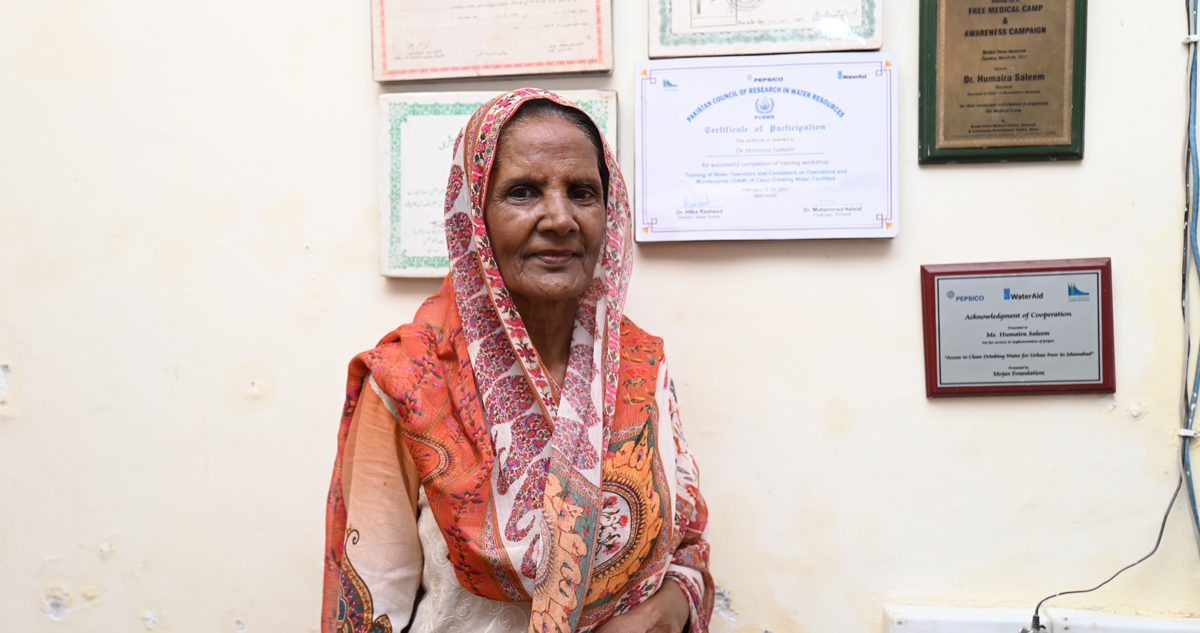
Dr. Humera Saleem at her clinic.
As a trained homeopathic doctor, she is also a social activist who advocates for holistic healthcare solutions, one of which is the use of clean water. In the small town of Humak, Islamabad, she trains local women on infant care, does physiotherapy, and
heads her own women empowerment NGO named Anjuman Falah-e-Khawateen apart from being a champion of the cause of safe water for all. Her door is always open for those seeking advice on matters of healthcare and their lives, and by patiently engaging
with all, Dr. Humera remains a natural leader and beacon of hope for her community.
It is her deep connection to the community that alerted her to growing cases of patients suffering the effects of unsanitary water all the time. She knew water in their area was both scarce and of poor quality, but the polluted water was also the cause
of much of the health woes of the residents of the community. From diarrhea to hepatitis and skin disease, there was not an ailment they did not have to deal with. And children, specifically, were suffering the most. To resolve the matter, she reached
out to local authorities to get safe water for her community, but all her requests and petitions went unheard.
Things changed one day when representatives from PepsiCo and WaterAid visited the community to share that they would be setting up a water filtration program called “Access to Safe Water” in the area. The people of Humak had struggled with
schemes to improve their circumstances that didn’t take off in the past. There had been several plans by various entities to alleviate water woes in the community, but none had succeeded in creating a smart model that would survive on its own.
The Access to Safe Water program presented a unique opportunity: water filtration plants and a plan to empower the community to ensure the project would take off and succeed in the long term through community stewardship. The local implementing partners
found their greatest ally in Dr. Humera, who used her status as a community leader to bring people on the same page.
She mobilized her community, especially women, and was chosen as the President of the area’s Women Water Users Committee that was formed with the consensus of the local community. Together, they came to a consensus about how the project would function
in their community. This proved to be the perfect mix that had eluded the community in the past.
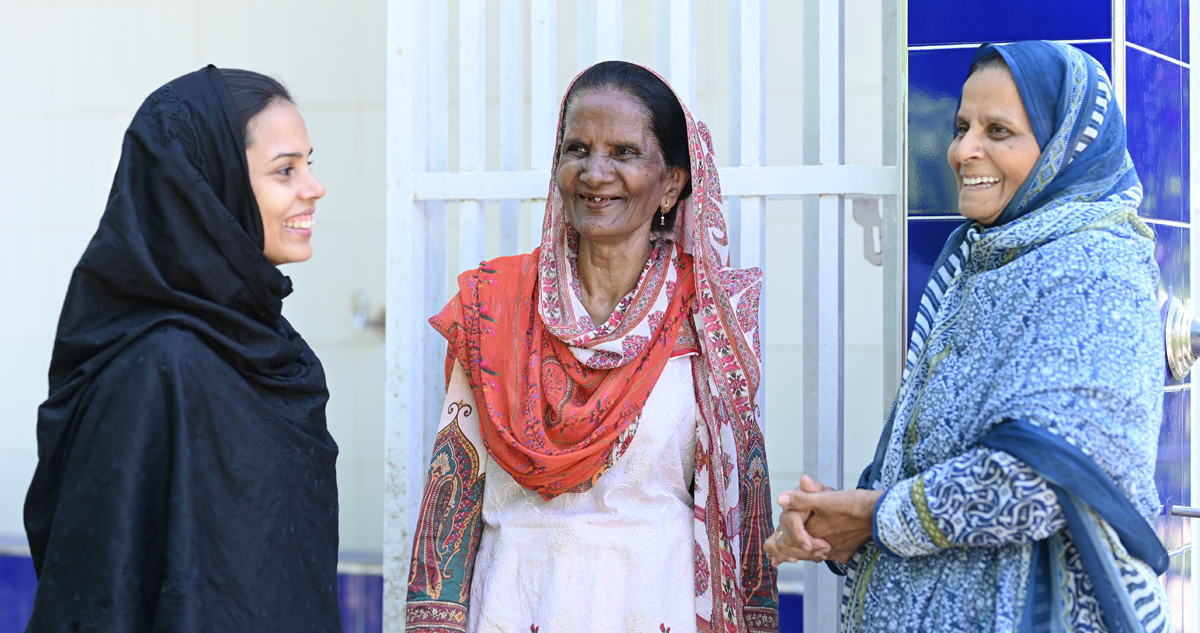
Dr. Humera mobilized the women in her community to get involved with the Access to Safe Water program.
“When we had our first meeting, people would not believe this (the water plant) would be installed,” Dr. Humera says, acknowledging the major trust deficit that existed within her community.
“They thought we would also pitch the project and disappear. But we called them for weekly meetings, and we briefed them that your participation for the project is essential. Because once our agreement is over […] the water filtration plant
will need to be handled by you (the community). This is where we, the community, would become the owners of the project. It was a big responsibility.”
Women Leading the Charge on Water Stewardship
Through PepsiCo’s ‘Access to Safe Water’ program, there is a majority of women spearheading the charge for safe water availability in their communities. This is because as men work in places away from their homes, it is the women who
run their homes and are centered around their children’s wellbeing and other household chores that keep life running.
Understanding the local dynamics and this routine, Dr. Humera knew she had to empower the women of the community to step out and help her build a plan where all women could run the water facility, expand the community’s access to such a safe resource
and take home enough water to run everyday operations smoothly. Women became custodians of the initiative and formulated a plan that the water committee will transparently collect funds from within the community to manage the operations of the plant
to become self-sufficient in the years to come.
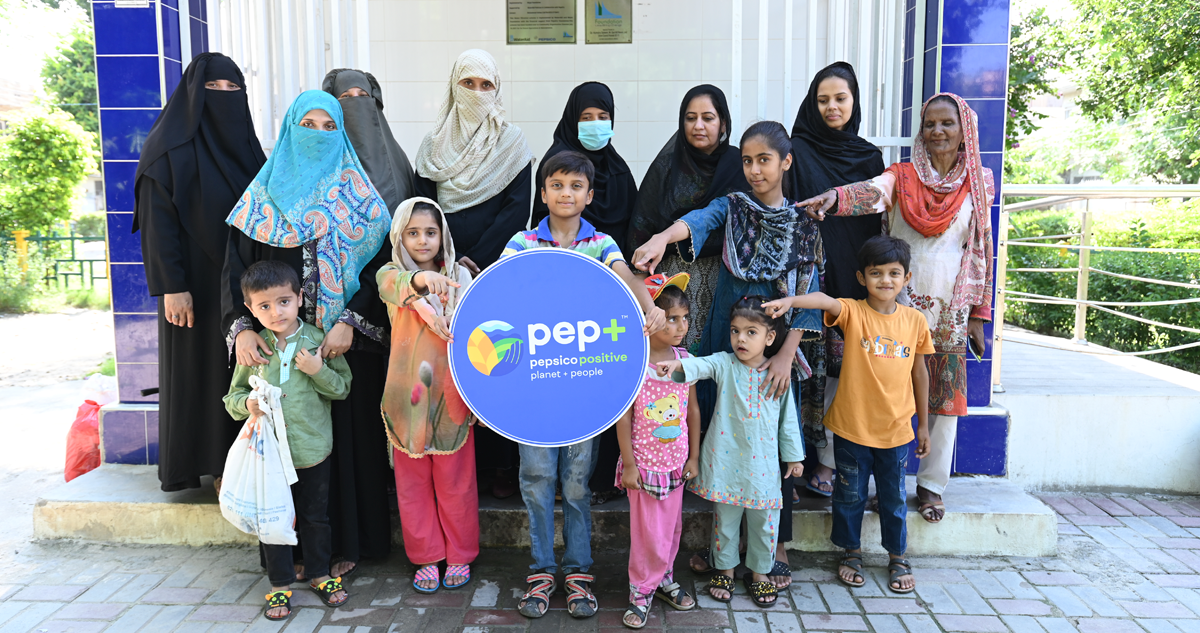
Women leading change and children benefiting from drinking clean and safe water.
While talking about the project, Dr. Humera candidly shared how she mobilised women of her locality to achieve this seemingly impossible task.
“We organized all women members on one platform,” she proudly states. What became even more critical was the task of getting all women together under one platform, spreading awareness about use and importance of filtered water and sharing
the knowledge of how contaminated water impacts health.
Dr. Humera added, “We explained to the community how we can keep disease at bay with use of safe and clean water and showed them how to safely transport water from the plant.”
Dr. Humera’s efforts indicated the power of teamwork and unwavering unity. As for inclusion, women, along with men, get equitable access to the clean water supply and their concerns are heard with compassion by community leaders who truly understand
them. The women leaders hope their efforts would get all children of the community to lead safe and healthy lives, keeping deadly diseases at bay.
“I must admit I was astonished when the project was being implemented in Humak, even as I worked with the PepsiCo and WaterAid,” Dr Humera says, “But as I know now, PepsiCo and PepsiCo Foundation care about communities getting safe and
clean water across the world, so they are doing the same in Pakistan. I am grateful to them.”
PepsiCo and WaterAid have installed four community water filtration plants in Humak, Islamabad, and another one in Islamabad Model College for Girls, Humak.

Students of Islamabad Model College for Girls, Humak, have plenty of fresh water
and are benefitting from project led WASH trainings.
One plant was installed in the local government dispensary in Humak, while a seventh plant was rehabilitated and handed over to the community in Saidpur Village, Islamabad. The plant in Dr. Humera’s community filters 2000 liters of water per hour
and serves hundreds of people in a day.
As the program continues, there have been a lot of significant and positive changes in the community, and Dr. Humera supports and encourages all of them. “The project has evolved significantly. It includes community empowerment, gender equity and
dignity, inclusion, and health rights of children. Community sensitisation on hygiene, water safety and water conservation are also important aspects.”
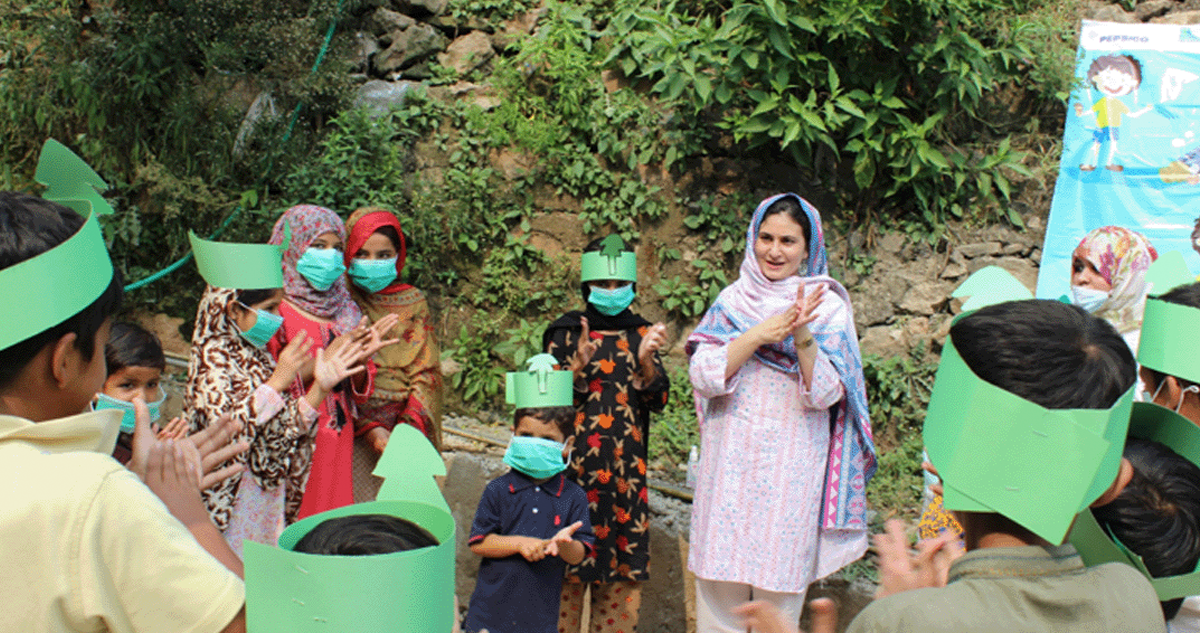
WASH activities are a key component of the Access to Safe Water program to further support the community’s health and hygiene needs.
Dr. Humera continues to keep her community engaged with the running of the plant in her area and happily reports that the incidents of waterborne illness have decreased, which makes her immensely proud and happy as a healthcare practitioner and as the
head of the Women Water Users Committee.
“Change feels tangible,” she says. With her resilience and calm leadership, there is no denying that.